Author Archives: admin

Mace replies to some questions

Mace has replied to several questions I put to them last week. I thank them for the time taken to respond.

You can see the Q’s and A’s in this document. http://bit.ly/1PXYcOi (The doc is stored in Dropbox. If you click this link it will open for you to read.)

They also provided a Sunlight Technical note to accompany their answers about sunlight. You can see the whole sunlight assessment on the Vale’s application website under Supplementary Documents.

Feel free to post any comments here. Mace reads this blog. 🙂


Amenity Space Assessed in the Sunlight Study

I’ve read most of Mace’s sunlight study.

Most (but not all) rooms have adequate sunlight and daylight according to BRE Guidelines.

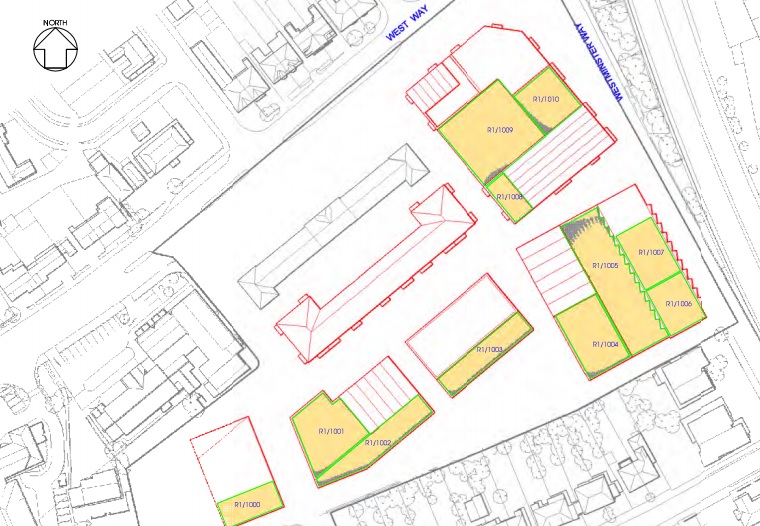
Amenity space in sunlight studyWhere the sunlight study falls down, is in its assessment of the sunlight and daylight in public amenity spaces. The study only assessed the private roof top gardens (the yellow patches on the diagram above), not the ground floor areas, the spaces between the buildings, where the public will spend their time.

Mace need to provide a study of ‘sunlight on the ground’.

PS. (And I need to look this up to verify. North-facing rooms are of questionable appropriateness. Does the Sunlight Study assess the north-facing studios in Blocks C&D?)


The Student Management Plan (SMP)

I met up with Mace’s planners today with a list of questions, derived both from others’ questions, and my own. We agreed on a scheme for getting the answers out to the public and I will do that as they are provided. (Involves Dropbox and file sharing, but never mind. I’ll publish them as I get them.)
 
One earnest question I had was over the Student Management Plan, which many of us have said was not fit for purpose and largely of poor quality.
 
I can make THREE main points.
 
1. I’ve requested Stuart Walker (Vale Planning Officer) to make it a condition of any eventual approval to have an approved proper SMP before occupation. Mace’s planners today essentially agreed that’s fine.
 
2. They tell me that usually an SMP would be developed later in the project, probably just before opening for business. The lower priority at this stage of the project has (unfortunately) led to the problems we’ve all seen in it. It isn’t a planning consideration; it was intended to reassure us that there would be a strong plan in place for managing the future tenants, and any problems that arise.
 
3. Where ever it says Botley Development Company (BDC or BDCL) read ‘Mace’. Mace will be running the student accommodation.

Mace’s Daylight Sunlight Assessment

I’ve had some question about the way the tall buildings of the new proposal will affect the sunlight in the centre of the development, and also the houses nearby. This question is both from others and within my own mind

Mace submitted a Daylight Sunlight Assessment with their planning application. You can see it on this page. http://bit.ly/1MVyg5L

Have you seen it? What do you think? I’m going to read it now.

(PS. I think I can hire myself out as a proofreader. £20 per hour do you think?)

Botley Air Quality Levels 2005-2014

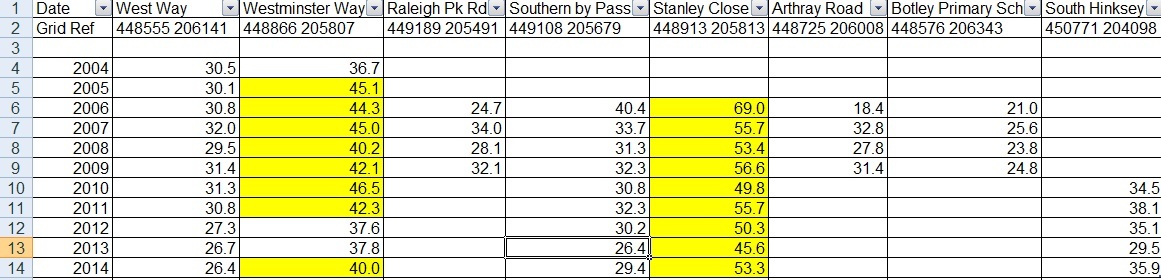
Here are the historical values for levels of nitrogen dioxide (NO2) in the Botley Air Quality Management Area (AQMA) and other locations nearby.

In February 2016, Vale officer Tim Williams kindly took me on a tour of Botley, so I could see for myself the locations of the diffusion tubes currently in use. He shared his data with me, which I appreciate.

I’ve highlighted in yellow every location and year when the average reading exceeded the EU threshold (currently 40 micrograms per cubic meter). Botley AQMA table

To make this table fit here, I’ve hidden two columns: Hutchcomb Road and Harcourt Hill. Hutchcomb Road is the baseline area. It’s still tracked but figures there are under 20.  Harcourt Hill was only measured for 2 years (2010-11) and figures there were under 30.

Many people express concern about Botley School. Their figures are in the table above. Figures were consistently low, so measurement ceased after 2009.

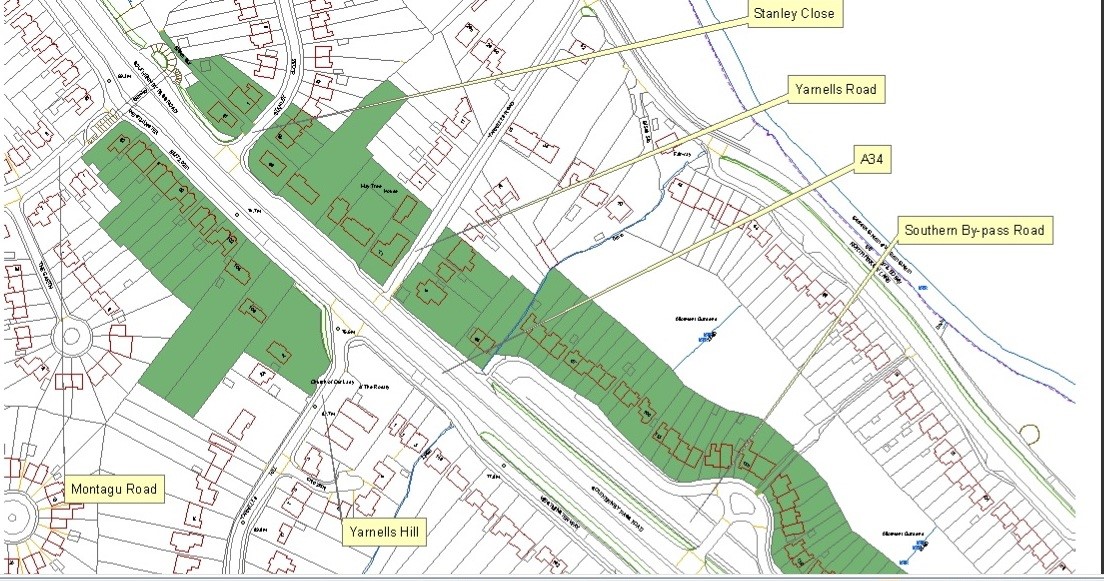
Here’s the map of the Botley AQMA. In the green areas, our air pollution is or has been above EU limits.Botley AQMA map

For more information on Vale Air Quality, see the Vale’s website: http://www.whitehorsedc.gov.uk/services-and-advice/environment/pollution/air-quality/how-we-monitor


West Way Centre – 3d models

The community has requested scale models both times there’s been a planning application for West Way. Both times, we’ve been turned down.

Gordon Stokes has managed it with Excel, and gave me permission to post them.

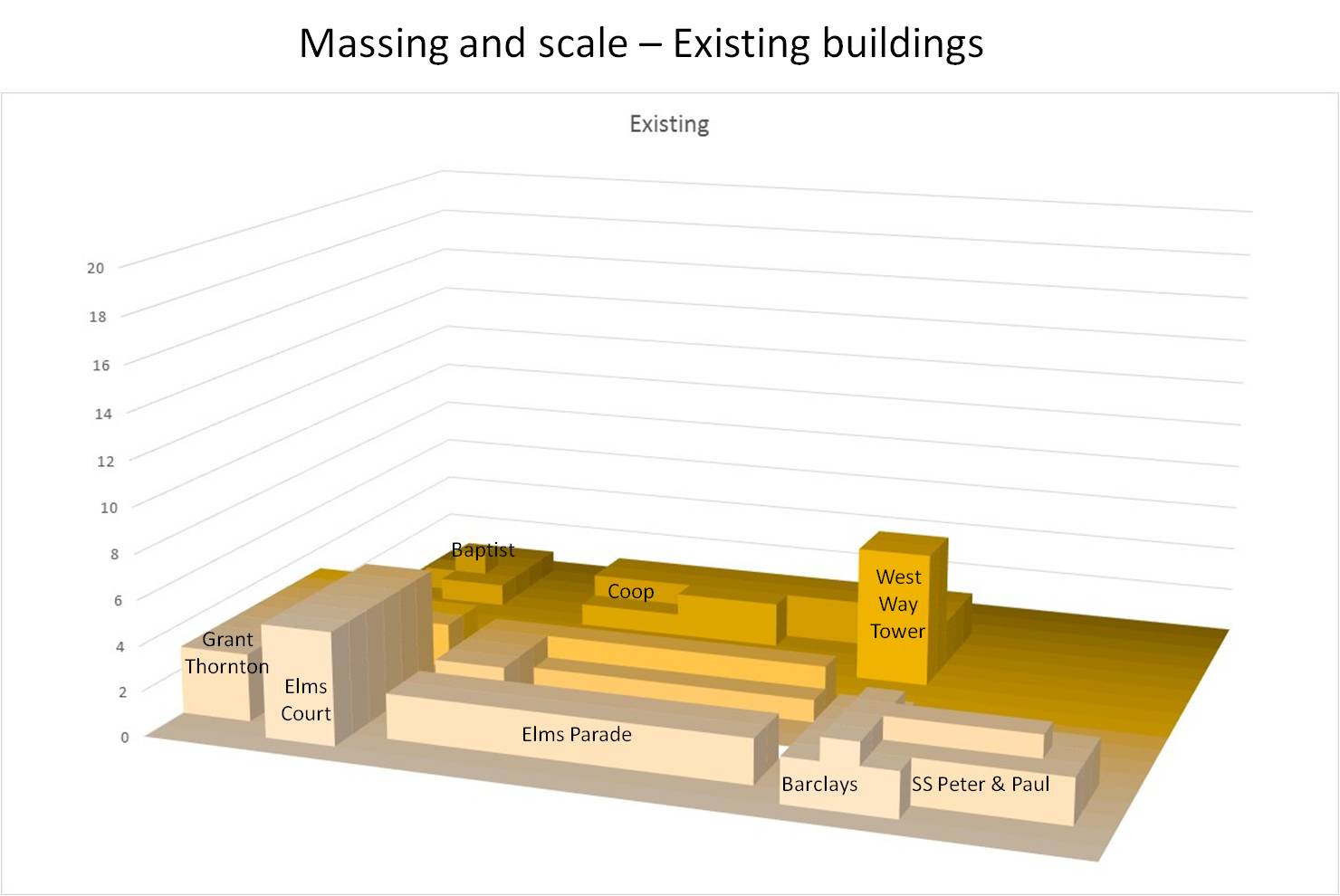
existing mass scaleHere’s a diagram of the current massing and scale of buildings in West Way. (Click on image to make it larger). The sun comes from mostly behind the buildings, especially in winter when the sun is low in the southern sky.

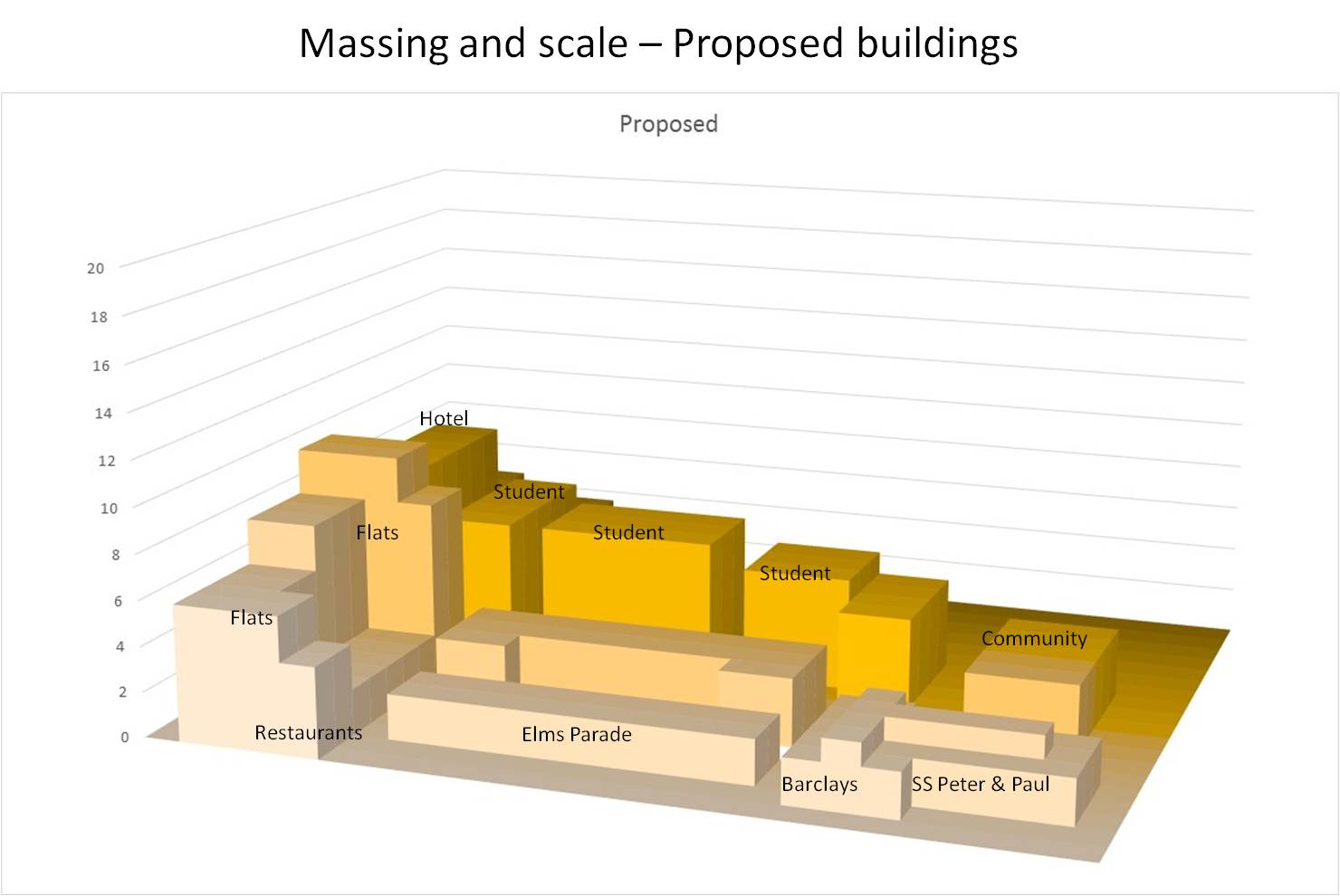
proposed mass scaleAnd here’s Mace’s proposal. (Click to make it larger, if you dare.) I’m concerned about sunlight. Remember, it comes mostly from the south, or behind, these buildings.  What will it be like in the pedestrian spaces between the buildings?

Let’s look at it all from a lower elevation. 

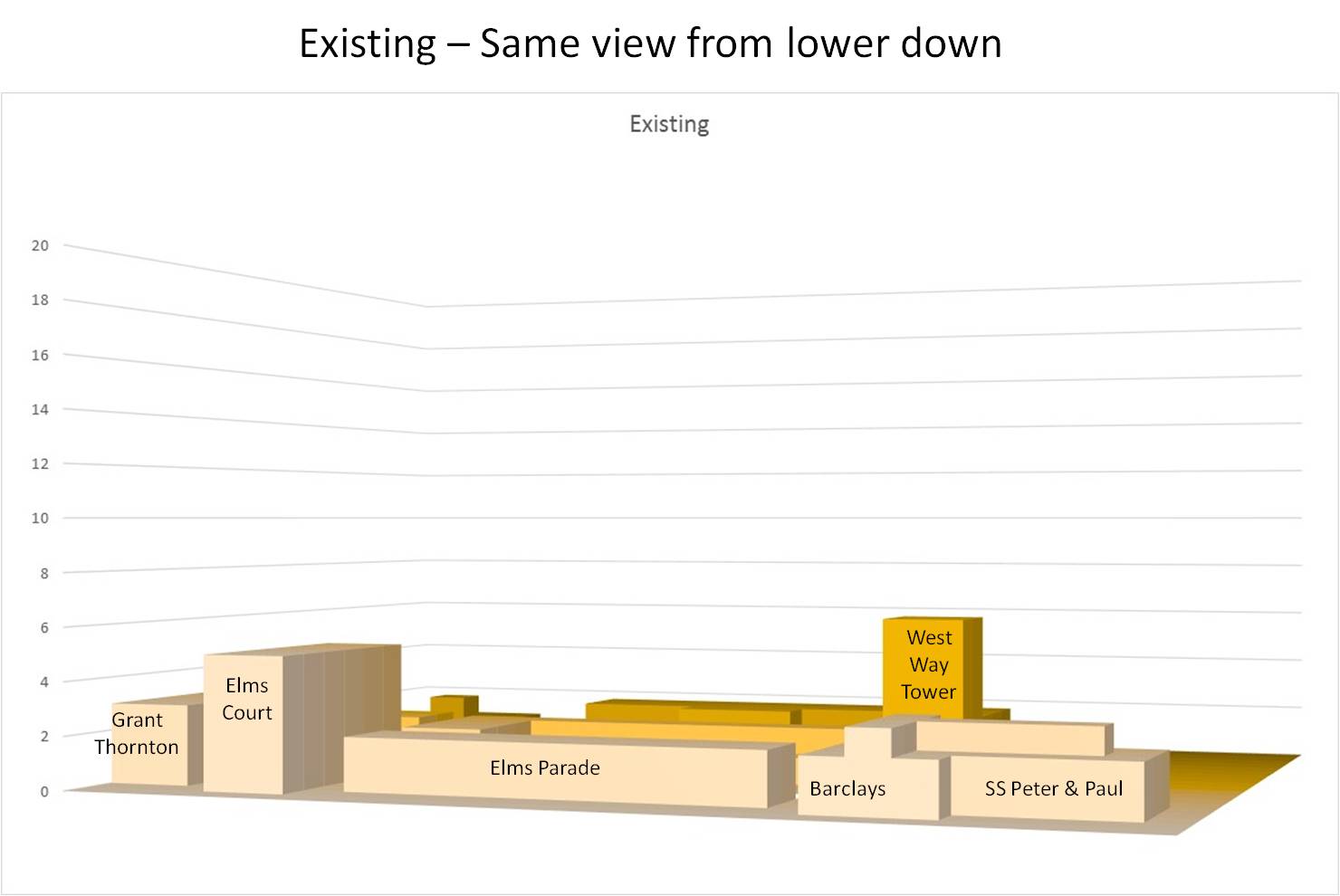
existing lowerHere’s a view from lower down, as if you were maybe up above the new flats in West Way. Currently West Way Tower and Elms Court (the building that holds the Library) are the two tall buildings.

Prposed lower

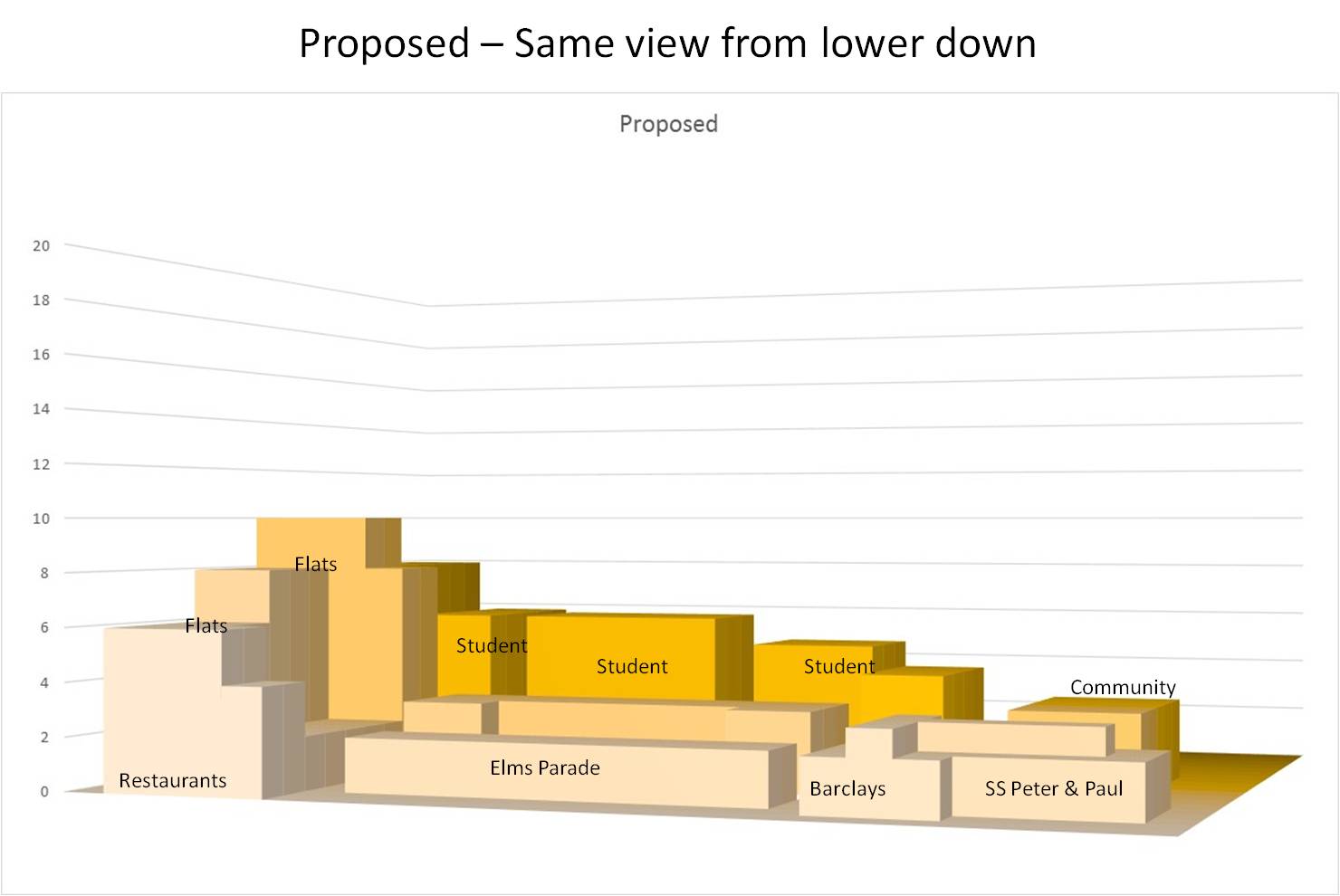
And here is Mace’s proposal. The tallest buildings are 4 storeys higher than West Way Tower. See the largest block labeled ‘student’? That’s the same height as West Way Tower.

And now let’s look at it from the south. 

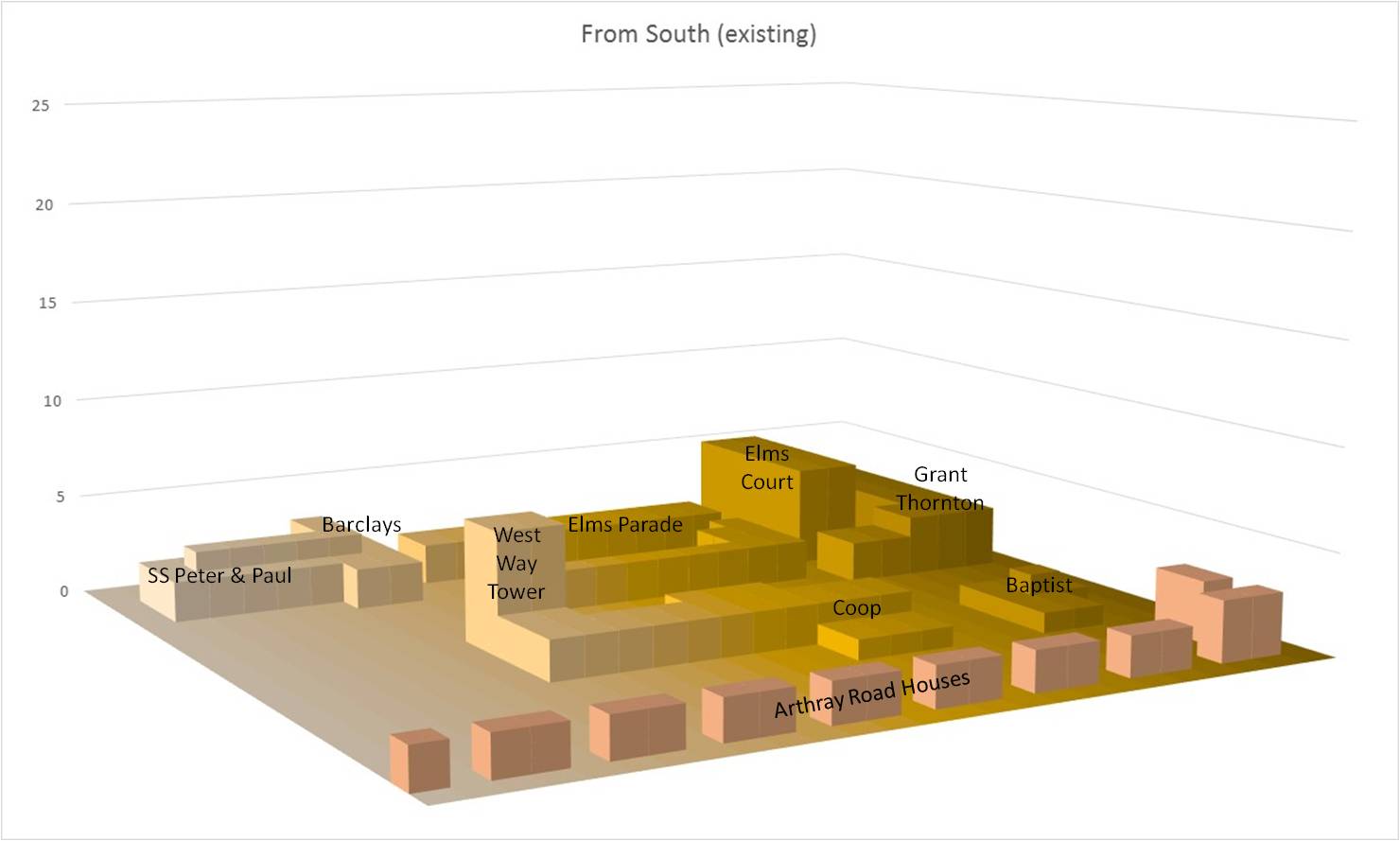
existing from southThe houses in the foreground are on Arthray Road. The winter sun comes from behind you.

Prpoposed from south

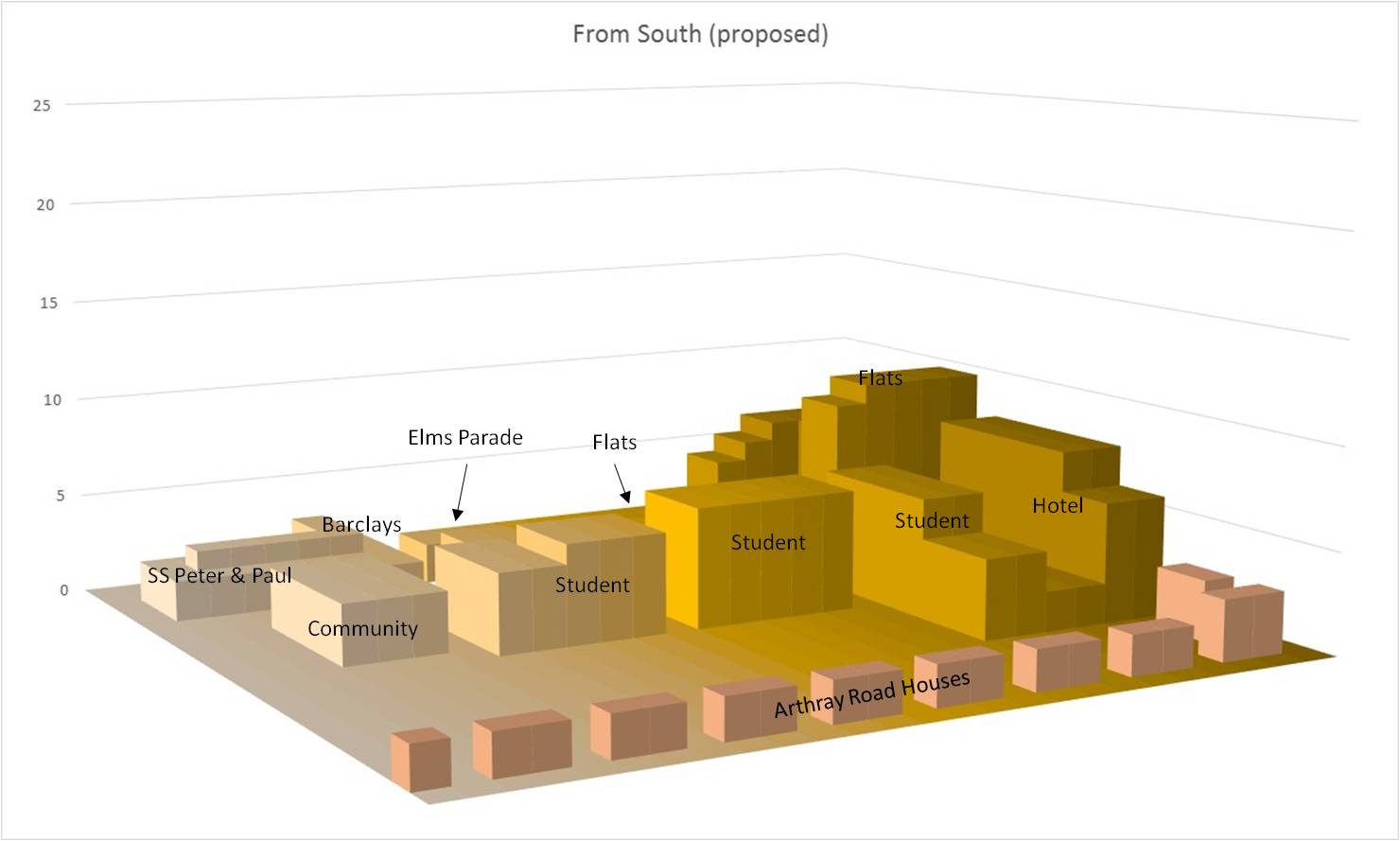
Here’s the same perspective of the new proposal. Remember the sun comes from behind you.

Planning Applications – how they’re determined currently

Residents who oppose what they see as inappropriate development are feeling frustrated at failed attempts to see planning applications refused. It used to be the principle that, ‘This isn’t good enough to approve. ” Now the rule of thumb has changed to, ‘This isn’t bad enough to refuse.’ That’ change in perspective has come along since the National Planning Policy Framework (NPPF) was adopted, which states a presumption in favour of sustainable development.

Right now the Vale of White Horse has no adopted Local Plan, and therefore Vale cannot demonstrate a 5 year land supply for house building. Once the Local Plan is adopted, we will have both of those things. Until we have both those things, refusing a planning application is difficult, but not impossible. Until we have both those things, our local policies hold less weight, and the NPPF is the main policy.

In his Decision Report for 54-56 Hurst Rise Road of November 2015, the Inspector considered the applicant’s appeals against refusal. He said:

Background and Main Issues

3. The Council accept that they cannot demonstrate sites sufficient for five years worth of housing against their housing requirements as they are advised to do in the National Planning Policy Framework (the Framework). Paragraph 49 of the Framework advises that housing applications, as this is, should be considered in the context of the presumption in favour of sustainable development and that relevant policies for the supply of housing should not be considered up to date if the Council cannot demonstrate a five year supply of deliverable housing sites. The presumption in favour of sustainable development is set out at paragraph 14 of the Framework and includes advice that where relevant policies are out of date planning permission should be granted unless the adverse impact of doing so would significantly and demonstrably outweigh the benefits of the scheme. Given the need to boost significantly the supply of housing and that the site is located within the built up area of Botley, an area where new housing will be permitted subject to its impact on character and facilities important to the local community (policy H10 of the Vale of White Horse Local Plan 2011, July 2006 (LP)), there is strong support for the principle of developing the site for housing.

4. However, the presumption in favour of sustainable development seeks to achieve economic, social and environmental gains and positive improvements to the built and natural environment. I must therefore consider the detailed aspects of the proposals against these aims to determine whether the benefits of the development proposals would be significantly and demonstrably outweighed by any adverse impacts that may arise from granting permission such that the proposals would not amount to sustainable development. (my emphsis)

So, wherever it can be convincingly demonstrated that the harm from the proposed development significantly and demonstrably outweighs the benefits, the application can be refused. 

There’s the strategy. That’s the trick.

My Comments for 56 Hurst Rise Road

I just submitted my comments for the planning application at 56 Hurst Rise Rd. Here’s what I said:

I write as the local Vale of White horse council member for this area.

I’ve studied the plans and docs available. I note that the Tree Officer would like to see a current tree survey and some cross section drawings.

It’s actually quite difficult to picture the scale of what’s proposed, because there are no drawings showing the context of the proposed houses in the street scene, nor any drawing to show us how the proposed houses fit into the context of the site and with its neighbours. That seems a serious enough shortcoming.

Applicant claims the inspector approves of this plan for detached 4BR houses; how can that be? Could the officer please clarify this for residents and for me?

I also notice that tree reports (and other data?) come from old studies submitted with applications that were refused. I think there’s a reasonable chance that since the applications were refused on larger grounds, the fact there is no objection on these specific grounds named in the design statement are irrelevant and do not assume there would have been no objection had the applications been considered further. By that I mean, if the proposals are determined to be much too big and harmful to the character of the area, enough to warrant refusal, would detail of tree surveys be closely studied? Maybe so, but I don’t know. Surely a new application on a site different to the refused applications deserves properly current accompanying reports.

This is part of the lower density area of Cumnor Hill as defined in Vale’s Design Guide. In checking the Design Guide for lower density areas, there’s a useful checklist on page 142. Is there evidence that these issues have been considered in this proposal? I would have expected pre-application meetings to cover all these issues.

It does appear this development would be out of keeping with the local area. It’s a large semi-detached structure, built right up to the property boundaries, without garages or room to turn cars to be able to exit in a forward facing direction.

Does the parking scheme comply with section 4,3 of the design guide? It appears the four parking spaces, intended for 8 bedrooms plus visitors and delivery vehicles, hasn’t been well thought out. We expect that the front gardens are not parking dominated (see principle DG82).

Please can the officer address issues of density and how this proposal fits into that aspect of the character of the area.

Please can the officer clarify the private amenity space for each house. With 4 bedrooms, each house should have 100 sq m of private outdoor space.
Mace’s Student Management Plan

The Student Management Plan submitted by Mace with their planning application needs quite a bit of work.

Aside from punctuation, grammar errors and typos, there are a few errors of substance.

First, Botley Development Company (the new name of Doric Properties) are to be managing this student and university staff accommodation. That doesn’t instill confidence, as I haven’t seen evidence they have done this before. In various places in the SMP, we are to be reassured by BDCL’s experience in managing quality student accommodation. I’m unaware Doric have ever done this before.

Second, this SMP is written for halls full of teenager undergrads, who will all arrive at once in the autumn. My understanding is that much or most of this housing is intended for mature or grad students, or staff at one of the universities. It needs to be rewritten with the actual make up of the residents in mind.

Third, on site staff will need offices and facilities of their own. I haven’t seen these in the plans. Are they there and I missed them?

Fourth, an out of hours on-demand bus service between Headington and City Centre doesn’t make sense. How does that help students and staff living in Botley? This seems to demonstrate a lack of care in creating this doc, OR, confusion about where this student accommodation is to be built.

Finally, we are assured that wardens and staff will do checks to ensure no students’ cars are parked locally. I don’t understand how this will work. What will be checked? All cars parked locally against a list of registrations for cars students promised not to bring? How will that work?

I also have questions about cycle parking. If the cycle parking is not provided near the doors to accommodation, won’t students simply bring their valuable cycles into their rooms? That can’t be good.

I think the best solution at this stage is to make the approval of a well-formed Student Management Plan a planning condition (if the application is approved). My request is for the planning case officer to add this to the list of planning conditions.

47 West Way – my speech to Cttee

On 23 Mar 16, Planning Committee granted permission for the proposed flatted development, by 6 votes to 3.  Vale officers’ view was that these flats are to be sold on the open market, so it’s a case of caveat emptor. Vale says they are providing people with a choice. I spoke to object to it, saying this:

  1. Officer cites as precedence for under-provision of parking the flats down the street, built with zero onsite parking about 8 years ago. That decision led to residents parking their vehicles in streets way over the other side of the A34 flyover. And THAT led to implementing a CPZ at not insignificant cost to residents there. Delivery vehicles to the flats must park half on the pavement and half in the busy road, obstructing both.  This decision was a mistake, harming residents and the wider community, so don’t let that work in your minds as a successful precedent.
  2. The officer’s report fails to adequately consider the accumulated harm from the various shortcomings:
    1. Officer points out harm to the character of the area, due to three stories in the midst of two storey structures, and unmatched styles.
    2. Officer points out that highways thought a dropped kerb in front of Oxford Sofa Studio next door was unsafe due to the busy road. Surely the same applies here?
    3. Officer points out significant noise on the site.
    4. Officer points out harm to the amenity of future residents and neighbours.
    5. Officer points out the density of 110dph is high, but doesn’t give a steer about how high or what would be appropriate for this area. Saved Policy H15 sets 50dph as an effective density within Botley centre. That policy also makes clear that high quality living environments are the most important thing.
    6. Officer points out nearby locations of other dwellings where the noise is worse. Noise and congestion on A34 continues to increase. I don’t think previously built dwellings where noise levels exceed what’s healthy should in any way be used to justify building more of them.
    7. Officer points out that amenity provision is well below Design Guide requirements. I’ve asked him to provide details to committee. In some cases, provided amenity space is only 10% of the minimum required. A 2BR flat should have a minimum of 50sqm, and this one has only 5.
    8. Section 6.37 of the officers report explicitly assumes people living here don’t want amenity space. That’s just not true. That’s like saying people who can only afford to live here don’t deserve nice, quiet, private outdoor space. No! That’s not what we stand for.

The NPPF and our local policies explicitly support high quality design in our developments. This isn’t one.

I think the cumulative harm is significant and demonstrable and outweighs the benefit of the proposals.