Author Archives: admin

Cabinet defers decision on Botley SPD

The first thing that happened at Cabinet this morning (after a question from a member of the public about Abbey Meadow Pool, and then one about affordable housing at Grove) was that four members excused themselves in order to maintain the separation between property sales and planning.

Remaining were Cllrs Cox (chairing), Murray, Dickson and Lovatt.

Cllr Cox proposed to defer decision on the Botley SPD to give them time to check the various claims they’ve had of unlawful and unsound practices. Cabinet agreed to defer.

Those who had come to speak were invited to, if they liked. Dr Mary Gill spoke first. Then Dr Stephen Parkinson. Mr Neil Rowley of Savills declined. Cllr Dudley Hoddinott spoke too, after me.

I spoke, but didn’t deliver my whole pitch. My objective (the Main Thing) had been to convince them to go back, take another look and tighten up all the sloppy bits of this process. There was no point in arguing after that point was won. (They had me at “deferred”!)

But I questioned Cllr Cox about his conflict of interest in sitting on this panel. He was one of the Cabinet members who originally made the decision to sell the land to Doric in 2012.

I asked him if he could tell me the reason he did not take his seat on planning committee the night in Dec 2014 when the Doric application was determined. He said it was to avoid the appearance of bias. I asked what had changed between then and now, what made him think he wasn’t in the same situation. He said, “My hands are clean.” He said he has not been involved in the property side of the issue since those early days. I guess I’ll have to look and see if that’s the case.

When I asked about the timeline, we were told we can expect a statement “in a couple of weeks”.

Scrutinising the Botley SPD

At its 22 Oct 2015 meeting, the Scrutiny Committee agreed some recommendations to Cabinet regarding the Botley Supplementary Planning Document ( SPD). Committee can only recommend to Cabinet; it’s Cabinet’s responsibility to make the final decision.

Scrutiny recommended four things:

First, investigate the responses (from experts who should know about these things) that point out possible issues of lawfulness. One is from Mike Gilbert about how the SPD is based on the unadopted Local Plan 2031 rather than the current Local Plan 2011. The other is from Prof Riki Therivel about the lawfulness of the Sustainability Appraisal that didn’t have robust evaluations of realistic alternatives. The aim is to reduce risk of Vale being found liable for an unlawful, unsound decision.

Second, use the reported problems with the consultation process as learning points in a review of the Statement of Customer Involvement to remedy problems and improve.

Third, committee supports the inclusion of sheltered accommodation for the elderly on the Botley Centre site.

Fourth, assess the SPD for internal consistency (so that it doesn’t contradict itself) and also that it is consistent with existing policies, such as the Design Guide 2015.

That was a win for the people of Botley. Well done to everyone who contributed to that effort.

Next Step: Cabinet

At its on meeting on Friday 30th October, I’ll talk to Cabinet about these things, plus a couple of other things that have come to light since the Scrutiny meeting.

The couple of other things:

First, Mace sent in a response to the consultation that was missed out and wasn’t included in the consultation Mace Response screen shotanalysis. They had some suggested changes, which of course can’t be considered now. Here’s a screen shot that shows how Mace considers this SPD to be written to support the emerging Local Plan 2031.

You can wee Mace’s whole response via a link to Dropbox: https://www.dropbox.com/s/lqrsy651onano8t/Botley%20-%20SPD%20reps%20letter%20Mace.pdf?dl=0

Second, the consultants were told to include phasing of any development, so that vital services aren’t lost to local people for the duration of the construction. Consultants didn’t include this.

On Friday the 30th Oct 2015, Cabinet will make their best decision for the people of Botley, knowing what Scrutiny has recommended. Probably they’ll ignore us. But that’s their right; they’re in control.

Emily Smith’s speech to Scrutiny on Botley SPD

Emily Smith, presentation to Scrutiny Committee about Botley SPD on 22nd Oct 2015

Good evening Committee. I would like to talk to you about two of the concerns I have in relation to the SPD for Botley Centre. In a moment I am going to talk about height and scale, but first I would like to raise my concerns about the consultation process.

Consultation Process

It is my understanding that when there is a significant consultation on planning policy the Corporate Communications team can be involved at an early stage to ensure a well-planned and high quality consultation. Meaningful consultation is difficult. It requires clear explanation of the information being discussed and carefully worded questions to ensure reliable responses are gathered. However, this consultation missed key questions, such as ‘what should the maximum building height on the site be?’ and residents described to me feeling ‘manipulated’ by the online form asking questions in a way that were difficult not to agree with.

The consultation report in your pack, states that residents aged over 60 are ‘over represented’ among the respondents. But clearly there are lots of young professionals, children and teenagers living in Botley so why were engagement events for these groups not planned from the outset. In the end communications staff from corporate strategy and planning struggled to get groups of younger people together because the bulk of the consultation period clashed with the school summer holiday. They did squeeze a few groups in at the end, but if this had been planned earlier more could have been done and the number of meaningful responses from young people could have been higher. AND all this was going on at the same time as the Local Plan Examination in Public so Officers were difficult to get hold of during the consultation period when we had queries. To me, it all felt very rushed.

Having spoken briefly to officers it is my understanding that the Communications team had limited involvement and their recommended changes to the consultation questions were not all taken into account.

Perhaps committee could ask the Planning Policy team to explain who led on the consultation design and delivery and what the involvement of the communications team was? Did Planning Policy involve the ‘consultation experts’ from the beginning?  And why was the timing of a consultation on a clearly complicated and controversial document not more carefully thought through?

Maximum Height

Height and scale was one of the main reasons the previous application by Doric was rejected by the Planning Committee. As I have already mentioned, there wasn’t a question in the consultation about maximum building height, but the comments by residents and organisations, including Oxford City Council, clearly show a strong objection to the SPD enabling another planning application as large as the failed Doric proposal for this site. So why has the maximum height not been reduced in the final version of the Botley SPD?

Allowing 8 storey buildings in a residential suburb is also contrary to existing Vale planning policies, for example:

  • The adopted Local Plan policy H10 and S12 which says that development of any type must not harm the character or appearance of the area.
  • The emerging Local Plan states the same and specifically talks about West Way, Arthray Road and Westminster Way in Central Botley.
  • Section 5 of the Vale’s Design Guide states that “the scale of buildings should relate to their context” and 5.1.2 explains that urban areas of the district range from 2 to 4 storeys – which is clearly true of Botley. A Character Assessment describes roads opposite the SPD Site as ‘villagey’ and confirms that “Botley is a low level suburb that rarely rises above the level of 2 storeys”

So, again, why does the SPD allow buildings of 8 storeys when other Vale polices would only deem 4 storeys appropriate? Why the inconsistency? Are there any other local service centres with 8 storey buildings in the Vale? I am not aware of any.

I understand that whatever development happens in Botley it needs to be financially viable, for the developers and also for residents who don’t want to be left with a collection of empty retail units. However, some members of the community I represent perceive that the SPD allowing 8 storey buildings is being driven by the price the Vale are selling the land for. Clearly, if the land cost £1 to buy, viability would be easier to achieve with fewer commercial outlets on the site. The higher the cost of land, it follows that developers will need to cram more on to the site to draw customers in from places like Abingdon to make a profit.

BUT, an SPD is a planning policy document, so surely its adoption should be determined by planning considerations. This SPD should be about what is appropriate development for a local service centre in residential area, and ensuring that local people are not harmed by any planning applications that come forward.

So, what is driving the need for 8 storey buildings? How can the residents I represent, be sure that this SPD has not been influenced by the price that the Vale are selling the land for? And why, having read the consultation responses, have planning policy not reduced the maximum building height allowed in section 4.4?

In my view, the adopted Local Plan, under which this SPD will sit, is clear. Buildings in central Botley should be no more than 4 or 5 storeys high.

Committee members, please will you consider referring the SPD back to planning, so they can amend section 4.4 to bring the maximum building height of our local service centre in line with the adopted Local Plan, the emerging Local Plan, and the Vale’s Design Guide?

Thank you for listening.
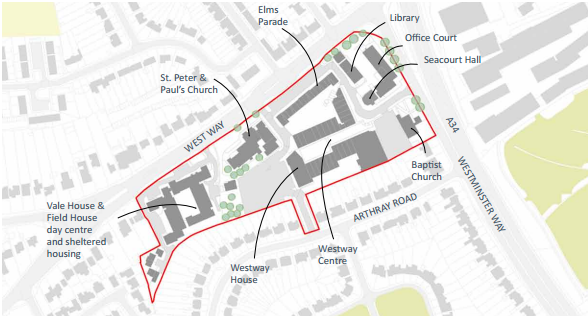
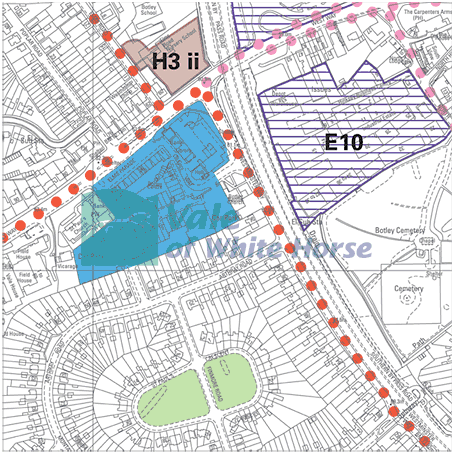
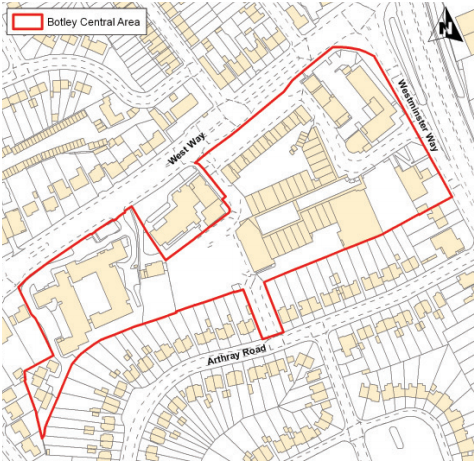
3 (or 4?) maps of Botley

Map Botley Centre SPD

Botley Centre SPD

Map LP2011

Local Plan 2011 Map of Botley Centre (blue area)

Map LP2031

Local Plan 2031 Map of Botley Centre

I’ve been studying what the experts say about the rules of writing a Supplementary Planning Document, or SPD.

The Botley Centre SPD has some problems. One is the boundary used to define Botley. Botley isn’t a real place, as I argued when they re-drew the Vale boundaries and created my new ward, Botley & Sunningwell. Botley is a geograhical area without a firm boundary defined; it’s not a parish. It includes most of North Hinksey Parish (arguably all of it, depending on who is arguing) and part of Cumnor Parish. It also could be argued that the part of Oxford City along the Botley Road west of Oxford is also Botley. There is also ‘Old Botley’, where North Hinksey Lane meets Botley Road.

The SPD is supposed to give more detail of policies in the adopted Local Plan 2011. Instead, it is formed mostly based on Local Plan 2031, which isn’t adopted yet, nor even examined.

Here are 4 maps of Botley: Local Plan 2011, Botley Centre SPD, and Local Plan 2031.

And then…

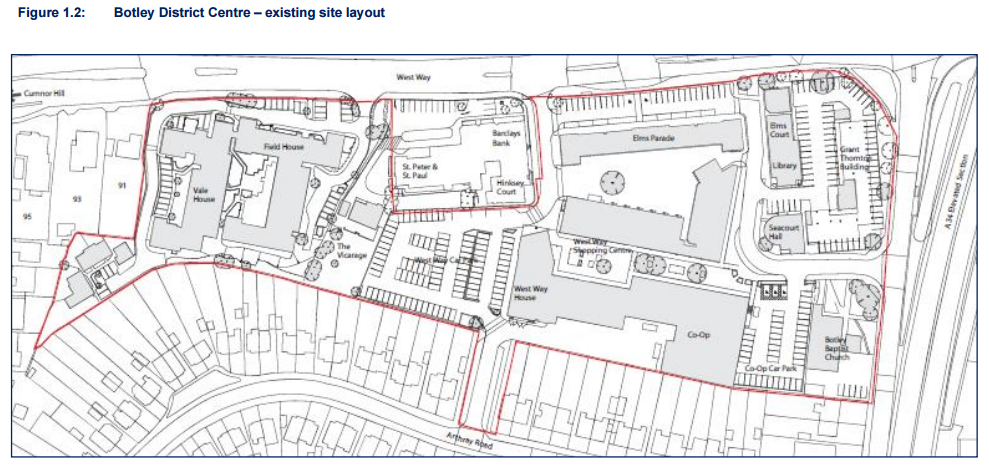
Just for giggles, I’ve dug out the map of Botley District Centre from the failed Doric planning application. Notice it’s identical to the map in LP2031.

Map Doric Botley District Centre

Botley District Centre – map from Doric’s failed planning application

Botley SPD: Is your response published?

The consultation responses for the Botley Draft SPD are now published.

See them here: https://consult.southandvale.gov.uk/portal/vale/planning/pol/botley_spd/botley_spd?page=1&pageSize=20&status=&tab=list&sortMode=response_date&q:sortMode

Some people have reported their response is missing, particularly if they submitted a letter or a paper form (rather than completing the online form). If you don’t see yours here, please let me or West Way Concern know straight away.

Every voice must matter.


34 North Hinksey Lane – my comments 2015

Here’s my response to the planning application consultation for 34 North Hinksey Lane.

In it, I state that I believe the fact that the last decision was quashed by judicial review shouldn’t be a consideration for planning committee members this time. I suggest that officers shouldn’t use it nor accept it as a relevant argument to the approval of this one. I strongly believe that, in the interests of fair play, we start from a clean slate.

My previous comments from March 2014 still apply. I write as the local member for Botley & Sunningwell ward.

The fact that this application has reached planning committee for the third time is irrelevant to the committee’s consideration of this one. In order to be fair, that fact should be not in the officers’  report to committee and should be refuted anywhere it comes up as an argument in this application.  (I understand committee members rarely read the consultation comments, so I should be safe in  mentioning it here).

This is a new application, with a new planning officer, and a (somewhat) new planning committee. In fact, a good case could be made for excusing from planning committee any member who was present for the site visit that resulted in the quashing of the previous decision by the court.

I’m studying the plans, trying to envision what this development will look like when complete, and how it will affect the streetscape. I can’t exactly imagine it; applicants have previously declared their intention to put angled solar panels on the roof. That’s a fine green thing to do. But it will raise the profile of the building and make it taller than its neighbours. How much taller will the solar panels make it?

Approvals in the area over recent years have brought a mishmash of design styles and quality to North Hinksey, and not all to our benefit. We have faux art-deco flats on Yarnells Hill, modern and boxy flats on West Way that loom over the neighbouring bungalow, and three storeys of flats where residents’ balconies overlook the A34 from a few meters away. This is not evidence of quality mixed neighbourhoods. It’s evidence of lack of vision and decision making to support development that improves the quality of an area.  The more Vale allows applications for design that doesn’t respond to the character of the area, the more these outliers are used as precedent to propose even more of them.

NPPF explicitly supports a mix of housing based on demographics and need, so I can support flats in this low-density area. But NPPF section 58 demands two important things: high quality design that adds to the quality of the area, and new builds that respond to the character of the area.

  1. High quality design that adds to the quality of the area. To my knowledge we currently have no standard for quality of design. This comes up repeatedly. The architects panel, is, I believe, intended to fulfil this role. But the process of review by the architect panel is so casual as to be sloppy; no minutes of what was considered, no re-check that the changes they recommend are implemented to their satisfaction, no consistency in their views (two separate reports have conflicting opinions, and their report is scrawled on a piece of scratch paper. (Others have complained about this process.) To my eye, this proposed development is a standard design to put up as many small flats as can be squeezed on a site. It’s not easy to see where there is a concern for quality of design or construction. Show me where I err?
  2. Responding to the local character. This is low density, semi-rural area of large plots with semi-detached and detached homes with pitched tile roofs. A flatted development should harmonise with those characteristics. (I’ve heard planning committee members refer to the appearance of the site now: ‘Anything is better than this.’ That’s disingenuous. If more developers heard members utter this sort of foolishness, we’d have a new strategy for gaining planning approval: Partially demolish a house and leave it to nature for two years, out up an ugly corrugated tin fence and then claim your ‘exciting, bold’ design is a welcome improvement.) Note the new builds just opposite and toward Botley; these fit into the character of the area. I urge committee to pressure all developers to build in quality, but producing a design that respects the character of the area. The benefit to that is for both current residents, and also those who will live here in the future.

Other issues:

  1. There will be massive soil removal, according to the plans. How does this threaten neighbouring properties? Is there history of underground water courses that will be altered in unpredictable ways by excavation such as this, threatening nearby properties as well as the viability of this one?
  2. I can’t see any amenity space for residents. Where will they BBQ, or watch their children play?
  3. Boundaries seem to be not correct, or at least still disputed (after two years). Vale officers could facilitate the resolution of this. It should be resolved before permission is granted, because it will be impossible to correct after the boundary has been exceeded.
  4. Residents of these flats to not have right of way access across the property of 18 Yarnells Rd. This has been made clear to the applicant for two years or more, and still he insists on having it in the plan. Do not approve this. It is not good enough to come along later and try to enforce it; resolve it at the beginning and prevent it from being a problem in real life.
  5. Residents of these fats will have no right to use the private Yarnells Road for anything, whether parking or bin collection. Do not allow the plans to consider this, but prevent it at the outset.

And finally, I see no reference to the Vale Design Guide, or that the applicant worked though any sort of checklist for this with officers. The Design Guide assumes a collaborative process has been followed, where officers and applicants sit down to look at what’s expected. I can’t see any evidence that’s happened.

I am encouraged by the response of the Vale’s Urban Design Officer, which I only found after I had finished struggling with my comment. You can see hers here, where I downloaded it to my Dropbox: Urban Design Officer Response

(I wonder if she responded to the Botley SPD consultation?)

To see all responses, go here and scroll down: http://www.whitehorsedc.gov.uk/java/support/Main.jsp?MODULE=ApplicationDetails&REF=P13/V2428/FUL


Local Plan Examination Day 3

Day 3 was spent arguing about discussing the SHMA, how it was designed, conducted, its assumptions and what possible evidence there could be to support the unprecedented forecast of huge growth in jobs and housing need.

Here’s a link to the Oxford Times article yesterday about the housing figures. It’s written by  Julie Mabberly, of Wantage and Grove Campaign Group: fantastic housing figures.

If I had been QC, at the table, here are the five points I would have made in summation:

  1. Vale claim repeatedly that SHMA figures are robust and fair. Only the developers and their agents seem to agree with this and they urge that this plan be adopted now. Parishes, open space proponents and ordinary people mostly disagree. If it’s true that SHMA is robust and fair, but most people see it as not so, then the quality of the communication and scrutiny is surely questionable.
  2. There is great irreversible harm associated with adoption of a Local Plan based on an unrealistically high housing need figure. Housing sites in green spaces, including the Green Belt (GB) and Areas of Outstanding Natural Beauty (AONB), are more likely to be brought forward first; they are less costly to develop than brownfield sites, so would be preferred by developers in order to maximise their profits. Some priority should be given to development of brownfield sites, before greenfield, then AONB, and finally GB (as GB is most protected) to ensure the permanent loss of irreplaceable space or beauty happens last, and only if needed. Of course all this applies only if we accept that housing need is exceptional enough to lose forever our Green Belt and AONB. The inspector will decide that.
  3. Corporations don’t plan 15-20 years ahead. It would be the rare one who even planned 5 years ahead. And they always forecast optimistic growth. No company would forecast stagnation. None would say, ‘We will be out of business in 8 years, with the loss of 2000 jobs.” No one would admit to a problem that’s just been exposed in Volkswagen. So of course the (unelected and unaccountable) LEP (Local Enterprise Partnership) would forecast optimistic business success and unprecedented economic growth, wouldn’t they?
  4. Vale’s Scrutiny Committee were frustrated when the SHMA report came before us. Every attempt we made to evaluate their process, assumptions, baseline, or any other part of it was obstructed. For the most part, we were told that we couldn’t see how the SHMA was done as the data manipulation (sorry, ‘modelling’) was a proprietary secret. We were told by senior Vale officers that we just had to accept the SHMA as it was.
  5. Government Guidance and the SHMA legislation itself told us explicitly that SHMA was not to be accepted as our final housing target. It was a baseline against which local constraints and issues of capacity were to be applied. It is relevant that we have constraints such as Green Belt and AONB and highways capacity and Flood Zones and maybe even builders’ capacity to build houses. (Vale’s average is about 400 houses per year. Best ever was just over 800. The new targets require 1028 per year to be built. How is that deliverable?) The Vale refused to perform that step and repeatedly asserted that they were forced to accept the full SHMA as our Obectively Assessd Need ‘in accordance with national policy’.

These are the reasons the Liberal Democrat Group continue to oppose a Local Plan that uses the un-assessed SHMA figure as our inflated housing target.

If this high figure is to remain the target, then a Plan-Implement-Review- Repeat approach could help us prevent over-development. But the scramble to claim GB and AONB land for easily profitable housing development will be ensured, I fear.

Botley SPD – my submission

I thought I’d publish the response I submitted yesterday to the Botley SPD consultation. Maybe someone will find it helpful for ideas. (I’m sorry I didn’t have time to write a shorter response; this is a page by page trawl.)

This opens the pdf in Dropbox. https://www.dropbox.com/s/bb7szbptbz27yad/Botley%20SPD%20Comments.pdf?dl=0

My main points have to do with:

  1. The way this consultation is being conducted
  2. Details of the content of the SPD not being evidence based and simply supporting the items in Doric’s failed application
  3. Tone of the policies being waffly (lots of coulds and shoulds, few (any?) musts and wills. NPPF says, in para 57: Local planning authorities should consider using design codes where they could help deliver high quality outcomes. However, design policies should avoid unnecessary prescription or detail and should concentrate on guiding the overall scale, density, massing, height, landscape, layout, materials and access of new development in relation to neighbouring buildings and the local area more generally.

The Botley SPD comes to Vale’s Scrutiny Committee on 22 October 2015, at 7:30pm in the Milton offices. The meeting is open to the public. You can ask a question or make a statement or present a petition. Contact democratic.services@southandvale.gov.uk to get your name on the speakers list.

Local Plan Examination Day 2

The morning session finished up the Duty to Cooperate and other legal requirements. Quite a lot of time was spent discussing the consultation process and the unfriendly system currently in use. This was under the topic of whether Vale satisfied its requirement to work according to the principles laid out in its Statement of Community Involvement. (I didn’t mention that this doc is so out of date it lists Dr Evan Harris as a statutory consultee. It’s from 2009. Even some of the bodies mentioned in there no longer exist.)

One letter of submission related how difficult to use even average users found the online system, and that they felt forced to use it from the advice they’d had from Vale. They felt it was unusable by many  disabled people or other ‘hard to reach groups’. CPRE’s submission had a detailed section on the shortcomings of the Housing Delivery Consultation from 2014; comments not counted, or hundreds subsumed into one, and strong points resulting in no changes to the Local Plan docs. I endorsed that.

I had a chance to relate two things: first, in the past 24 hours I personally encountered bugs in the Consultation system and requested help from Vale staff to complete my online  questionnaire, and second, that I had been asking for years in full council for Vale to publish the responses they had and how those responses had informed changes to the Local Plan, and was repeatedly put of with a promise that it would be published when the Local Plan was. Inspector asked the Vale, ‘Weren’t most of the changes that came from responses just minor? Answer: Yes.

One man, Dr N Perkins, was invited to speak primarily because his consultation response had gone missing. The inspector offered up the fact that this Local Plan had more submissions than any other he has ever seen. They are printed out in binders on the stage behind him, and there look to be maybe 25 – 30 binders. Vale’s QC tried to convince the inspector (and everyone else) that the missing document was a one-off, but Inspector clocked that there’s no evidence there weren’t many more missing responses. Then, in a breathtaking display of arrogance, Vale’s QC also said that it didn’t really matter if some responses were missed out, because they probably had nothing new to contribute anyway. Dr Perkins closed it out by saying, ‘Absence of evidence is not evidence of absence.’

One other interesting bit. Discussion about the compliance of Vale’s 2 part Local Plan, where decisions about the final 5% of development sites aren’t due for something like 3 more years. Many parish councils pointed out the high level of uncertaintly and confusion this creates in terms of their Neighbourhood Plans. If they new the exact numbers of homes their parishes needed to take, they could get on with deciding where the new houses would go.

The afternoon session opened the consideration of the SHMA figures, housing and employment figures. Dr Tony De Vere, former Leader of the Vale council, took over the Lib Dem seat at the table. I moved back to the second row, which is apparently just out of range of the microphone system. 🙁

I was happy to hear Julie Mabberly, of Wantage and Grove Campaign Group, point out the agricultural workers growth figures. This is where SHMA predicts huge, unprecedented growth in agriculture workers in Vale, such that 750 houses would be required to house them; 750 houses is like a hole new village. One man, not sure if he was Oxfordshire County Council or a Vale consultant, admitted (with some embarrassment) that these figures were unlikely to be accurate. Everyone then queried that if there is no confidence in this figure, how were we to have confidence in the other figures.

Julie also pointed out the data showing negative jobs growth in recent years, and very low population growth too. Look for an article in today’s Oxford Times about this.  Vale launched into an argument to say that past performance is not indicative of future performance. Vale denied that they jobs growth figures were aspirational, but others said there is no evidence to support such high projections. Inspector has asked for the various data sources and will determine which are more indicative.

Inspector asked if there is evidence that any new jobs created wouldn’t be filled by people already living here, rather than people immigrating from outside Vale? Good question. I didn’t hear the answers, The microphones are a constant problem, and I was no longer at the table for this part of the discussion.

Hearings resume Thursday 10am at The Beacon in Wantage. It’s open to the public.


Local Plan Examination Day 1

I’ve set aside a few minutes this morning to give my view of the main events on Day 1 of the inspectors hearings. Corrections to any of my ‘facts’ are welcome. There may be things I havent realised; please let me know.

The first matter discussed (of four matters over these two weeks) was whether the Vale has satisfied its legal Duty to Cooperate with neighbourng authorities, particularly over the matter of how Vale will help to meet Oxford’s unmet housing needs.

The room was packed. There were probably more than 50 in the audience. There were about 25 or so at the table (authorised to speak) and five were women (incl me, obv, and Cllr Judy Roberts, who was at the table for Cumnor Parish Council. Helen Marshal Director of CPRE. Also a woman from SODC whom I don’t know, and Sophie Horsley, head of planning policy. Some female members of her staff also joined in sometimes). I tend to notice these days where any panel or committee is particularly unbalanced. You may have heard my song #blokesblokesblokes. Limiting bodies to all men is bad practice.

Anyway. The Queen’s Counsels at the table dominated the conversations, as I would have expected. Clients need to feel they are getting their money’s worth. They were all men.

Cllr Matthew Barber spoke and then stepped back from the table to let the officers and the Vale QC do the talking. I was surprised to notice Cllr Michael Murray wasn’t there; he’s the Cabinet Member for Planning Policy, and this is his most important work. Odd that he wasn’t there. I noticed two Tory Vale councillors (there are many new ones and I don’t know them all). Attending for the Lib Dems: Jenny Hannaby, Judy Roberts, Bob Johnston, Catherine Webber and me, of the current council. Dr Tony De Vere, and Richard Webber, previous leaders. Tories: 3 of their 29 councillors, Lib Dems: 5 of our 9 (Lib Dem Conference is going on right now).

Vale believe they have shown up in good faith at and participated in the Oxfordshire Growth Board meetings, which demonstrates compliance. OGB is apparently the vehicle where these numbers and locations were meant to be achieved. Vale thinks Oxford’s refusal to review its pre-SHMA Local Plan to see what more they could do to help themselves meet their increased needs has made resolution s-l-o-w. Vale decided they could NOT have Oxford’s reluctance to cooperate endanger their own Local Plan being adopted, so they put in the plan that they intended to cooperate fully, once the actual figures and the agreed number of houses Vale should take, were known.

Oxford City believe they have suffered, and will continue to do so, from Vale not doing enough in this Plan to meet Oxford’s unmet housing needs. The shortfall in City is believed to be from approximately 8000-16000, but no agreed process has completed to determine the real amount, nor to analyse potential locations and apply selection criteria to them. City thinks Vale should have done an estimate and included that number of extra houses in their plan. Even as few as 50, would have satisfied them that Vale are doing all they can, QC said. (An odd argument, I thought.)

At this point I stated that Vale had an evidenced based plan (how many times have we heard that?) and to take a guess in this instance and use any old number would have been met with outrage from the public, and a plan based on such a random guess would likely not be found sound either. One of the QCs and the County Council (who want this plan adopted yesterday so they can get on with infrastructure plans) took that argument forward (that was fun!).

Last point: Green Belt boundaries are not to be changed very often. The plan removes 18 sites from Green Belt protection. If Oxford’s unmet need must be satisfied by developments in the Green Belt, is there enough land now being removed to accommodate this undetermined number? Vale first said hat couldn’t be known because there has been no process to identify locations or sites for Oxford. Oxford argued that it was obvious that GB boundaries would need to change again. Then Vale changed their message and said there was enough space identified in the current spatial strategy, plus their building is actually producing more windfalls now, that Vale were confident they’d be able to meet their share of Oxford’s unmet need without further GB boundary review.

At this point, there were gasps throughout the hall, as Vale changed their position. Inspector then asked his two authorities to go away and come back in a week to report if they had any common ground to agree between them. I thought the scene very odd; it looked like Vale hadn’t thought their position through. So we have that outcome to hear about by next Tuesday.

I don’t support this Local Plan 2031, but not on the grounds of Duty to Cooperate not being  met. The duty to cooperate isn’t a duty to agree. I think Vale did the best they could, relying on a weak process that isn’t effective , within the Oxfordshire Growth Board. (Which is all men.)